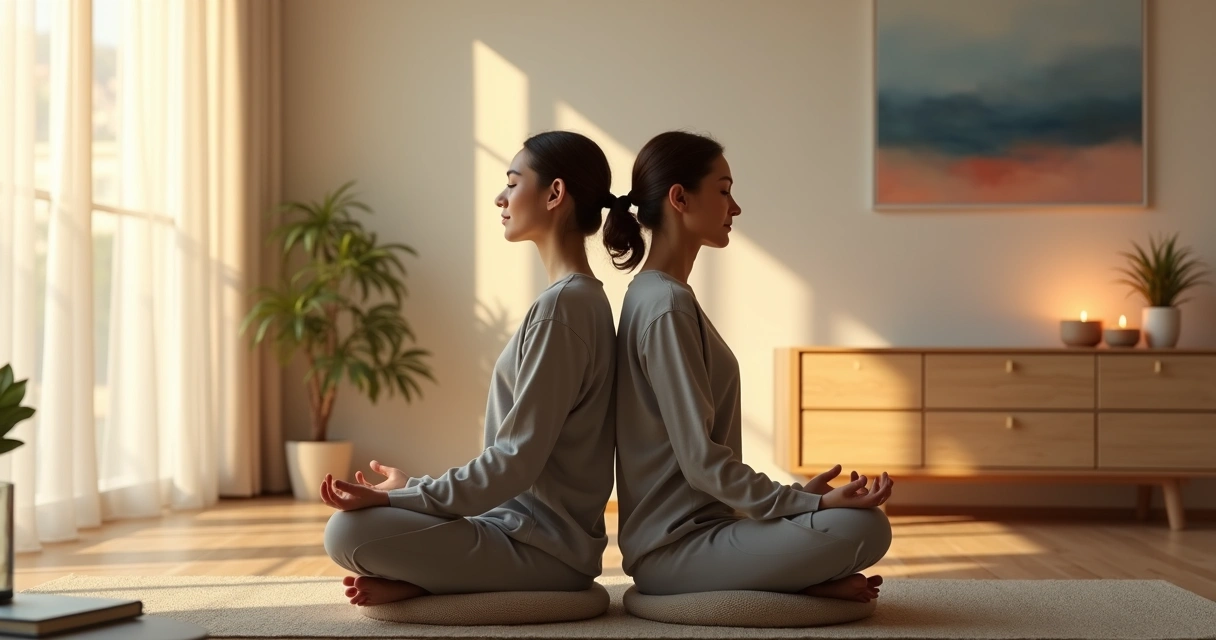


Those moments when time seems to slow down. We notice the warmth of a cup in our hands, the hum of quiet conversation, our own steady breathing. We might call that mindfulness, or maybe we would describe it as being fully present—what some traditions name conscious presence. But are these really the same? Or do each reveal something distinct about how we experience ourselves and reality?
Understanding mindfulness: the basics
Mindfulness is now part of our everyday vocabulary. In simple terms, mindfulness is the practice of intentionally paying attention to the present moment, with an attitude of openness and acceptance, free from judgment. We direct our awareness to what’s happening right now—our thoughts, sensations, surroundings—without letting the mind drift to the past or future.
Most commonly, mindfulness involves techniques such as:
- Focused breathing
- Body scan practices
- Observational exercises (such as mindful walking or eating)
The goal is to notice what is, rather than fix or change our experience. We train ourselves to return, again and again, to the present moment.
Presence begins when we notice what we are experiencing in real time.
We have found that mindfulness, in its essence, teaches us how to step out of automatic pilot. By aiming for non-reactivity and gentle observation, it can reduce anxiety, increase focus, and create mental clarity.
Defining conscious presence: beyond observation
While mindfulness directs attention, conscious presence takes another step. Conscious presence involves not only being aware of what’s happening, but taking responsibility for how we relate to it and allowing that awareness to guide our choices and actions.
Unlike some forms of mindfulness that may focus more on observation, conscious presence is less about being a witness and more about being an active participant in each moment of our lives, in alignment with our values, intuition, and purpose. Here, awareness is joined with intention.

In our perspective, conscious presence includes three elements:
- Perception: Direct, non-filtered awareness of our state, surroundings, and relationships
- Responsibility: Willingness to own our reactions, attitudes, and choices
- Creative Direction: Aligning inner awareness with intentional action or response
Rather than a neutral stance, conscious presence is characterized by agency and commitment. We meet each moment with all of ourselves, and choose. This often brings clarity not only to what is happening, but to what it could become.
Awareness alone is not enough; conscious presence brings awareness into action.
Comparing conscious presence and mindfulness
Both mindfulness and conscious presence value attention to the present, but what distinguishes them? Here is what we have seen:
- Mindfulness: Observes and accepts the moment. The attitude is gentle, permissive, non-striving. Mindfulness helps us pause, reset, and lower reactivity.
- Conscious presence: Observes, accepts, and acts within the moment. The attitude is of participation, alignment, and engagement. Conscious presence allows us to create and live from our inner center.
Mindfulness can be like watching clouds pass by from a window. Conscious presence is like standing in the field, feeling the air, deciding whether to open your umbrella or simply enjoy the rain.
Both practices value kindness to self. Yet, conscious presence makes a clear invitation: What are you choosing, right now, with what you know and feel?

Integration in daily life
We often hear people say, “I try to be mindful, but I don’t know what to do with what comes up.” This is where conscious presence enters. It recognizes that awareness is only the beginning stage. To live meaningfully, we must respond and participate.
For instance, when we notice anger during a meeting, mindfulness would guide us to become aware of it—feel it, breathe, and not judge ourselves. Conscious presence invites us to ask: What value is touched by this anger? What does this moment ask of me? How do I want to engage, speak, or choose now, given what I know?
This subtle shift can make a wide difference in:
- Relationships, where presence leads to vulnerability and real conversation
- Work, where clarity of awareness meets aligned action
- Personal reflection, where honesty meets responsibility
We have observed that while mindfulness is foundational, conscious presence is transformative. It not only helps us avoid reactive patterns but also allows us to author moments of authenticity and meaning.
Living awake is more than watching life; it is choosing how we move through it.
Challenges and possibilities
Both mindfulness and conscious presence face some shared and unique challenges. Getting distracted, falling into judgment, or losing awareness are common barriers. For conscious presence, another challenge is the courage required to act on what we notice. Sometimes what presence reveals is uncomfortable or complex.
We have learned that gentle perseverance and self-compassion are allies in both journeys. Each moment offers a fresh chance to return, choose, and realign.
Here are some ways we can nurture conscious presence after mindfulness takes root:
- Set intentional pauses during the day to ask, “How am I relating to this moment?”
- Reflect: What quality do I want to bring to this next action?
- Practice honest, aligned response—in words and in silence
- Nourish self-observation without harsh self-criticism
Conclusion
Mindfulness and conscious presence, though related, are distinct. Mindfulness strengthens our awareness and attention in each moment, setting the stage for calm and clarity. Conscious presence extends this, inviting us to be both aware and actively engaged, allowing our comprehension to shape who we are and what we do.
We have seen, through personal experience and collective reflection, that conscious presence is the art of showing up whole, awake, and ready to participate in every unfolding now. Mindfulness lays the foundation; conscious presence helps us build a life truly aligned with our deepest self.
Frequently asked questions
What is conscious presence?
Conscious presence is an active state of being fully aware, engaged, and intentionally responding to each moment, rather than just observing it. It involves bringing our whole self—mind, values, and intention—into every experience, with a sense of accountability for our thoughts, feelings, and actions.
What is mindfulness in simple terms?
Mindfulness is the practice of paying close, non-judgmental attention to the present moment. It’s about noticing our thoughts, feelings, and sensations as they happen, while accepting them without trying to change anything. The focus is on observation and acceptance.
How are conscious presence and mindfulness different?
The key difference is that mindfulness focuses on awareness and acceptance, whereas conscious presence adds an element of engaged, responsible action. Mindfulness helps us watch and accept; conscious presence asks us to participate and choose, based on what our awareness reveals. In other words, mindfulness is foundational, and conscious presence builds upon it.
Is it better to practice mindfulness or conscious presence?
One is not better than the other; they work together. Mindfulness helps us slow down and become aware, reducing reactivity and stress. Once this foundation is solid, conscious presence encourages us to turn awareness into meaningful engagement with life. We often recommend starting with mindfulness and growing into conscious presence as readiness and self-knowledge develop.
How can I start being more consciously present?
Begin by practicing mindfulness—simple techniques like mindful breathing or conscious noticing are a good start. Then, when you notice something (a feeling, thought, or reaction), ask yourself: What does this mean to me? What quality do I want to bring to this situation? How can I respond intentionally? Over time, these questions turn awareness into conscious presence, helping you live in a more integrated and purposeful way.