
Families are full of spoken rules, but they are also shaped by silent ones. We see this often. No one announces them at the dinner table, yet everyone seems to know them. Who stays quiet. Who fixes tension. Who gets protected. Who gets blamed.
Unconscious agreements are silent emotional rules that family members follow without clearly choosing them.
These agreements can bring order, but they can also freeze growth. A child may learn that love comes through obedience. A parent may feel they must stay strong at all times. A sibling may carry the role of the responsible one for years, even when it hurts.
Sometimes these patterns look normal because they have been there for so long. Still, they shape closeness, conflict, guilt, trust, and even identity. When we bring them into awareness, family life starts to make more sense.
They decide who can feel what
One of the most common silent agreements in families is about emotion. In some homes, anger is allowed but sadness is not. In others, fear is hidden and only calm behavior is praised.
We may hear phrases like “be strong” or “do not make a scene,” but the deeper message is often this: certain feelings are welcome, and others are not. Over time, family members adapt. One becomes the calm one. Another becomes the explosive one. A third learns to smile while carrying pain.
What is not welcomed gets buried.
This creates imbalance. Feelings do not disappear because they are ignored. They usually return through distance, tension, sarcasm, body symptoms, or sudden conflict.
When a family starts naming emotions more honestly, pressure drops. Not all at once. But enough for new forms of contact to begin.
They assign invisible roles
Many families run on role agreements that no one clearly discusses. We have seen this in simple stories that carry heavy weight. The oldest child becomes “the mature one.” The youngest becomes “the one who needs help.” One parent becomes the emotional center. The other becomes distant, but tolerated.
When a role is repeated for years, people may confuse adaptation with identity.
These roles often begin as a response to stress. If one parent is unstable, a child may become hyper responsible. If conflict fills the home, another child may become funny to reduce tension. At first, the role helps the system hold together. Later, it can trap the person inside it.
We think this is why many adults feel guilty when they change. Their family may not be reacting to the change itself, but to the breaking of an old agreement.
They shape routines and emotional safety
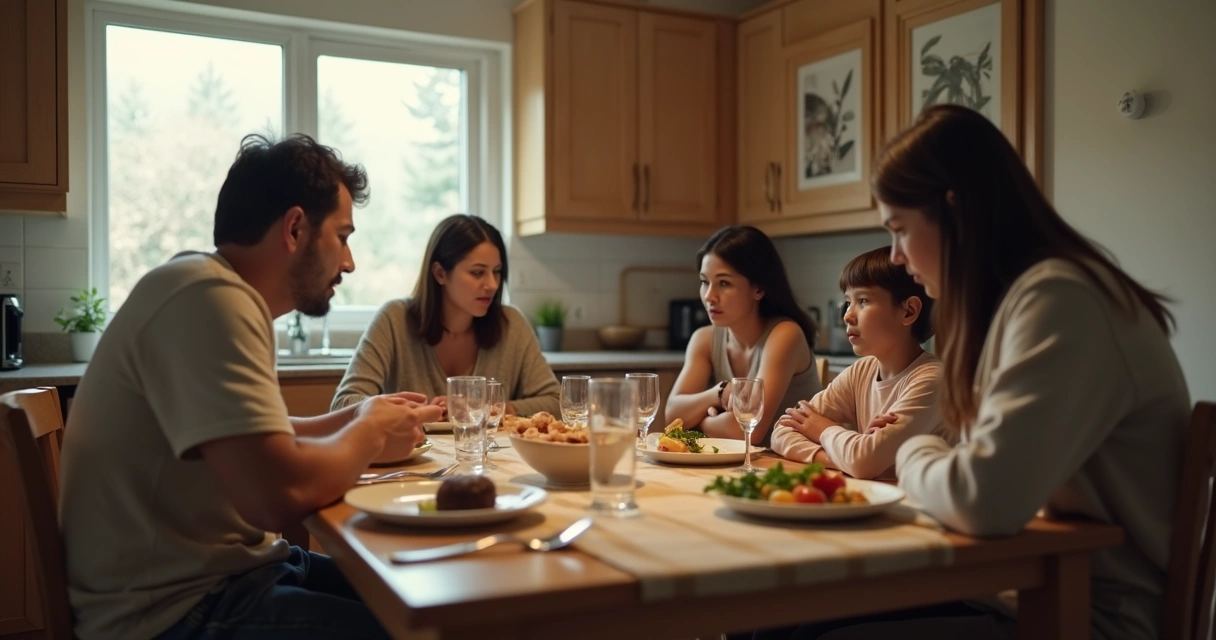
Family agreements are not only emotional. They also appear in daily structure. Who eats together. Who waits for whom. Whether bedtime is protected. Whether mornings start in chaos or rhythm.
Routine may seem ordinary, yet it tells us a lot about the hidden agreements of a home. A large U.S. sample of parents with young children found that only about 51% reported setting daily routines for meals, naps, and bedtimes. That means many families live without stable shared patterns, and this affects predictability and the emotional climate.
Children, and adults too, often relax more when life has clear rhythms. Structure does not remove all tension, but it can reduce uncertainty. In our experience, homes with healthier routines tend to make space for clearer expectations and fewer reactive clashes.
They define loyalty and belonging
Some unconscious agreements say, “If you belong, you stay loyal to the pain of this family.” This may sound harsh, but it is common. A person may avoid success because it feels like betrayal. Another may stay in unhealthy ties because leaving feels disloyal.
We sometimes hear this in subtle forms. A daughter who grows beyond old limits is called cold. A son who questions family habits is called arrogant. Behind the reaction is fear. If one member changes, the old bond may shift.
Belonging is powerful. Most people would rather repeat suffering than risk exclusion. That is why these agreements can survive for generations.
Still, loyalty does not need to mean repetition. A person can honor their family and also interrupt patterns that wound everyone.
They control conflict without solving it
Many families have hidden pacts around conflict. Some agree, without saying it, that hard topics should never be discussed. Others permit conflict only through indirect forms such as silence, criticism, or alliances.
This can create peace on the surface and strain underneath. We have seen homes where no one shouts, yet no one speaks honestly either. It looks stable. It feels lonely.
Avoiding conflict is not the same as creating harmony.
When conflict cannot move in a direct and respectful way, it tends to return in side channels:
Repeated misunderstandings
Cold distance after small disagreements
One person speaking for another
Chronic criticism disguised as concern
Bringing conflict into words can feel risky at first. But honest tension is often cleaner than silent resentment.
They pass pain from one generation to the next
Not every family agreement begins in the present generation. Some start long before us. A grandparent survives loss by becoming emotionally closed. Their child learns that tenderness is unsafe. Then the next generation inherits distance without knowing where it came from.
This is one of the hardest parts. People often judge their family pattern only by what they see now. But many reactions were once forms of survival. Knowing this does not excuse harm. It does, however, bring context.
We think compassion grows when we see that a rigid parent may have once been a frightened child, adapting to an older pain they never had words for.
They shape intimacy through distance or overinvolvement
Another silent agreement appears in the way closeness is managed. In some families, privacy is weak and everyone is inside everyone else’s business. In others, distance is so normal that real intimacy feels awkward.
Neither extreme helps relationships grow well. Overinvolvement can limit autonomy. Emotional distance can block trust. The family may call one version “care” and the other “respect,” yet both can hide fear.
A simple example stays with us. A mother calls her adult son several times a day, worried she is being loving. He feels watched, not supported. Neither of them is wrong in intention, but the agreement around closeness has become too tight.
Healthy family bonds allow connection without control and space without abandonment.
They affect the stories people tell about themselves
In the end, unconscious agreements do more than shape behavior. They shape self-image. If a person grows up carrying the family’s anxiety, they may believe they are “naturally tense.” If they were ignored, they may think their needs are too much.
These private stories can last for decades. That is why awareness matters. Once we notice the agreement, we stop treating it like fate. We begin to ask better questions. Is this really who I am, or is this the place I learned to occupy?
That question can change a life. It can also soften a family. Not because everyone changes at once, but because one person starts relating with more clarity, less fusion, and more truth.
Conclusion
Unconscious agreements shape family relationships by guiding emotion, roles, routine, loyalty, conflict, inheritance, and closeness. They often begin as attempts to protect the group. Yet what protects at one moment may later limit everyone.
When we make these silent rules visible, we gain choice. We can keep what supports care and let go of what keeps pain in motion. This is not about blaming families. It is about seeing them more clearly, and seeing ourselves more clearly inside them.
Frequently asked questions
What are unconscious agreements in families?
Unconscious agreements in families are unspoken rules, roles, and expectations that members follow without openly discussing them. They shape how people express emotion, handle conflict, give care, and define belonging.
How do unconscious agreements affect relationships?
They affect relationships by guiding behavior behind the scenes. They can create stability, but they can also lead to guilt, distance, role pressure, poor communication, and repeated conflict that no one fully understands.
Can unconscious agreements be changed?
Yes, they can change when they become visible. Awareness, honest conversation, emotional maturity, and new boundaries can interrupt old patterns. Change may feel uncomfortable at first because it shifts familiar roles.
Why do families form unconscious agreements?
Families form them as ways to manage stress, pain, fear, and belonging. Many of these agreements start as protective adaptations. They help the group function in hard moments, even if they later create limits.
How can I spot unconscious agreements?
We can spot them by noticing repeated roles, emotional taboos, tension around change, indirect conflict, and phrases such as “that is just how we are.” If the same pattern keeps returning across years, a silent agreement may be active.