

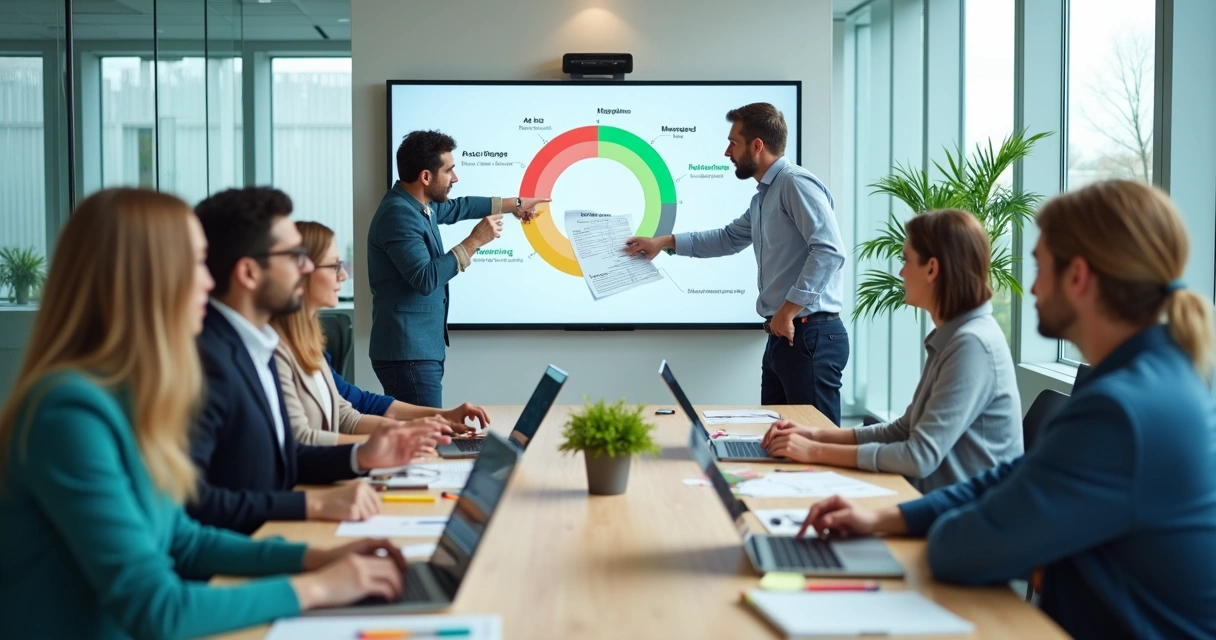
Project teams are no longer measured solely by individual skills or milestones achieved. Increasingly, results come from how mature a team is as a collective—how people think, feel, decide, react, and evolve together. But how do we measure this quality of “collective maturity” in a way that is practical, fair, and leads to growth?
Understanding collective maturity
When we talk about maturity in teams, we mean more than just years of experience or technical ability. We are pointing to the shared emotional, relational, and decision-making patterns that shape how a group operates over time.
"Collective maturity is not how well each individual performs, but how wisely the group moves together."
In our experience, collective maturity shows itself in how teams handle emotions, face setbacks, make honest decisions, learn from mistakes, and support each member’s growth. It blossoms in teams that greet feedback with curiosity, disagreements with respect, and challenges with shared ownership.
Why collective maturity matters
Teams operating from higher maturity create safer environments, make more thoughtful decisions, and build trust over time. They recover from conflict more quickly and adapt to changing directions without fracturing. In our research, we see that a mature collective acts almost like a single living mind—thoughtful, calm, and focused under pressure.
Teams with higher collective maturity tend to outperform teams that rely solely on task proficiency or top-down leadership.But this isn’t magic or luck. It is developed through clear assessment, honest reflection, and ongoing practice. The first step? Knowing how to measure collective maturity in project teams.
Principles behind measuring maturity
Assessing something as nuanced as collective maturity may feel complex, but we’ve found the process becomes clear when based on a few guiding principles:
- Focus on group behavior, not individual personalities
- Assess patterns over time, not snapshots
- Include emotional, relational, and procedural dimensions
- Combine objective data with subjective input
- Keep the process safe, honest, and constructive
Let’s walk through how this can look in practice.
Building your maturity assessment framework
We recommend starting with a framework that touches on the main areas of collective maturity. This way, you can spot both strong points and blind spots in your project teams.
Key dimensions of collective maturity
- Emotional awareness: How the group notices and manages shared emotions, such as frustration, excitement, or anxiety, and whether there is openness about feelings in discussion.
- Trust and psychological safety: Whether team members feel safe admitting mistakes, asking for help, or sharing opinions, even if unpopular.
- Conflict management: How the team handles disagreements—are differences voiced and resolved, or swept under the rug?
- Decision-making: Does the group involve all perspectives? Are choices made with both facts and values in mind?
- Accountability and responsibility: Is there a sense of shared ownership, or is blame shifted? Are everyone’s commitments clear?
- Learning orientation: Does the team take time to reflect and learn, or just keep moving without pausing for improvement?
To bring these areas to life, we often use direct observation, brief surveys, and guided discussions as the primary tools for gathering insights.

Designing practical measurement tools
In our work with teams, we recommend blending quantitative and qualitative methods. Here are some examples:
- Self and peer surveys: Short, anonymous questions about how people experience the group’s climate—for example, “I feel comfortable speaking up in meetings,” on a scale from 1 to 5.
- Facilitated reflection sessions: Structured group talks that ask, “What do we do well together? What do we avoid? Where can we grow?”
- Behavioral observations: Notes made during meetings, such as how often team members interrupt, how conflicts are resolved, or whether humor and appreciation are present.
- 360-degree feedback: Input collected from a range of people inside and outside the project, offering an external view of the team’s maturity markers.
- Story gathering: Asking for specific examples or stories of times the group handled a tough moment, celebrated a win, or supported a member in need.
None of these tools are perfect. But in our experience, when used together, they create a clearer picture of where the team stands.
Making results meaningful
Once you collect input, the real question is: what do you do with it?
Measurement matters most when it sparks real insight and growth—not just scores and labels.We encourage teams to look at patterns, not single scores. Where do we often act together as a mature group, and where do we slip? Sometimes just seeing a pattern can spark a shift in team behavior.
Anonymity and honesty go hand in hand. Encourage frank conversation about results, with a focus on growth, not blame. These are difficult conversations, but they are also the start of deep transformation in how the group lives and works together.

Common stumbling blocks and tips
It’s never completely smooth. Here are a few real-world tips that we’ve collected:
- Guard against blame: Measurement is for learning, not pointing fingers. Foster respect in every step of the process.
- Start simple, then go deeper: Don’t overload your team with complex models at the start. Choose one or two dimensions, gather feedback, and build from there.
- Involve everyone: Teams notice quickly if voices are left out. Encourage broad participation, so the results reflect the real group dynamic.
- Act on small wins: Rather than aiming to “fix” everything, focus on making progress in a couple of areas. Celebrate improvements, however small.
"Measurement is just the start. The real change comes with commitment."
Bringing maturity measurement into team culture
Perhaps the biggest change we’ve seen is when teams begin to see maturity measurement not as a task, but as an ongoing part of how they work. They add reflection to regular meetings. They use feedback as a guide, not a verdict. Over time, mature teams become more self-aware and intentional.
This mindset makes measurement habitual, not a one-off event. It sets the tone for honest dialogue, wise action, and shared leadership—not only inside projects, but across organizations and communities.
Conclusion
Measuring collective maturity is more than an assessment—it is an invitation to real team growth. By focusing on group behavior, applying clear frameworks, and choosing simple methods, we can both understand and strengthen the capacities that matter most in a project team. The process is ongoing, honest, and worthwhile, shaping a new level of collaboration, trust, and achievement.
Frequently asked questions
What is collective maturity in teams?
Collective maturity in teams refers to the shared emotional, relational, and decision-making patterns that influence how groups work together over time. It reflects how the team, as a whole, manages emotions, handles conflict, builds trust, learns from mistakes, and adapts to challenges—beyond just individual skills or personalities.
How to measure team collective maturity?
Team collective maturity can be measured by using a mix of surveys, observations, feedback, and reflection sessions that look at group behaviors and climate. Assessments focus on areas like emotional awareness, trust, conflict management, decision-making, responsibility, and learning culture within the team.
What tools help assess collective maturity?
Several helpful tools include self and peer surveys, facilitated reflection meetings, behavioral observations during project work, 360-degree feedback from different stakeholders, and gathering real stories from the team’s day-to-day experience.
Why is collective maturity important?
Collective maturity is important because it leads to healthier team dynamics, greater trust, and better results under pressure. Mature teams communicate openly, recover quickly from setbacks, and achieve goals through stronger collaboration and decision making.
How can we improve collective maturity?
Teams can improve collective maturity by regularly reflecting on their behavior together, seeking honest feedback, learning from both successes and failures, and committing to small actions that build trust, responsibility, and shared growth. Integration of reflection into team routines accelerates this evolution.