

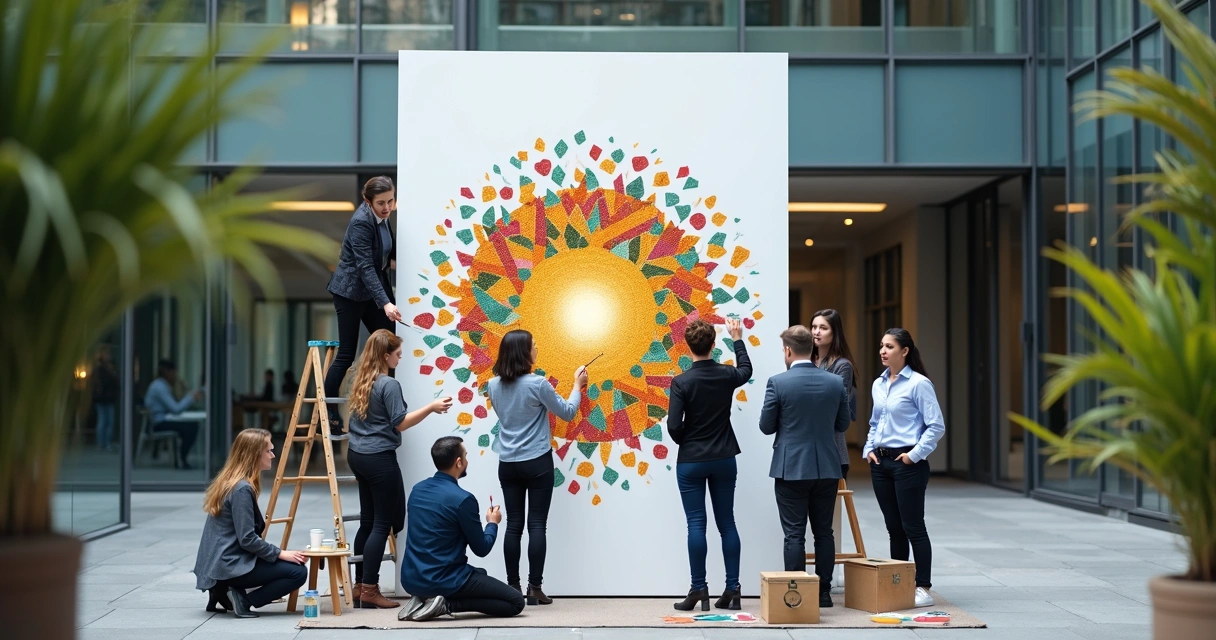
When people from different cultures work together, we often expect fresh ideas, broader vision, and better decisions. That can happen. But it does not happen by itself. In our experience, multicultural teams do not struggle because people are too different. They struggle when those differences are left without a shared frame.
Shared values are the agreed principles that guide behavior when habits, assumptions, and styles are not the same.
We have seen this in teams that looked strong on paper. Skilled people. Good intentions. Wide experience. Yet small tensions grew fast. One person saw direct feedback as honesty. Another felt disrespected. One valued speed. Another valued careful review. Nobody was wrong. Still, trust started to slip.
Difference without alignment creates noise.
Building shared values in multicultural work settings means creating a base that is clear enough to unite people, while flexible enough to respect human variety. It is not about making everyone think the same way. It is about agreeing on how we will work, decide, relate, and repair tension when it appears.
Why shared values do not appear on their own
Many leaders assume values will naturally form over time. Sometimes they do, but not in every team. A longitudinal study of 33 real work groups found that in groups with low ethnic diversity, members’ values tended to grow closer over time, and this was linked with better group results. In highly diverse groups, that value convergence was weak or absent. That tells us something very practical. In multicultural settings, shared values need to be built with intention.
We think this matters because people often confuse proximity with unity. Working in the same room, joining the same calls, or using the same tools does not mean we share meaning. A team may be connected in structure and still divided in interpretation.
That is why leaders and teams need to name what they stand for in concrete terms. If respect is a value, what does respect look like in meetings? If accountability is a value, what happens when a deadline is missed? If inclusion is a value, how do we make sure quieter voices are heard?
What shared values look like in practice
Values only help when they can be seen in behavior. Nice words on a slide rarely change daily work. We need to translate values into visible habits.
Some shared values that often support multicultural teams are:
- Respect for different communication styles
- Curiosity before judgment
- Clarity in decisions and expectations
- Shared responsibility for trust
- Care in feedback and disagreement
These values become real when we attach action to them. Curiosity may mean asking one more question before reacting. Clarity may mean summarizing decisions at the end of each meeting. Shared responsibility may mean that conflict repair is not left only to the manager.
A value becomes useful when people can point to the behavior that expresses it.

Trust is built through agreement, not assumption
Trust in multicultural teams is often discussed in broad terms, but we prefer to keep it simple. People trust more when they know what others mean, what they can expect, and how the group handles tension. In teams with many cultural references, that shared reading is not automatic.
A multistudy investigation on trust consensus in culturally diverse teams found that greater national cultural diversity was linked to lower trust consensus, meaning people were less aligned in how much they trusted one another. Teams with higher trust consensus performed better. We read this as a strong reminder that trust is not only personal. It is also collective.
One team we observed had a simple practice that changed everything. At the end of each week, they spent ten minutes answering three questions:
- What helped us work well together?
- Where did we misunderstand each other?
- What do we want to repeat next week?
It was not dramatic. It was steady. Over time, the team became less reactive and more honest. People stopped guessing as much. Trust grew because language became shared.
How leaders can shape a common value base
Leadership has a strong role here, but not as a force that imposes culture from above. We see better results when leaders act more like translators and guardians of the agreed frame.
There are a few ways to do this well:
- Name a small set of values the team can actually practice
- Invite discussion on what each value means across cultures
- Turn values into team norms for meetings, feedback, and decisions
- Address breaches early, with firmness and respect
- Review the values often, especially after growth or change
This matters because mutual support has measurable effects. A large meta-analysis with about 67,228 participants across 172 studies showed that Team-Member Exchange strongly predicts both in-role and extra-role performance, with even larger effects in vertical-collectivistic cultures. In plain terms, when people support one another well, teams work better, and this can be even more meaningful in group-oriented contexts.
Shared values grow faster when leaders model them under pressure, not only when they talk about them in calm moments.
Common mistakes that weaken shared values
We have seen teams make the same mistakes again and again. Not from bad intent, but from lack of awareness.
One mistake is choosing values that are too abstract. Words like excellence or integrity may sound good, but they can mean many things. Another mistake is avoiding hard conversations in the name of harmony. Silence does not protect a team for long. It often stores tension until it comes out badly.
A third mistake is treating one cultural style as the default. This can happen quietly. Meeting pace, response time, eye contact, speaking order, and conflict style may reflect one norm while pretending to be neutral. People feel that imbalance, even when nobody says it aloud.
Inclusion needs structure.
When we slow down enough to notice these patterns, we can correct them. Sometimes a small change does a lot. A written meeting recap. Rotating facilitation. A feedback guide. Clear speaking rounds. These are simple acts, but they tell people, “You belong here, and your way of making sense also counts.”

How we can make shared values stick
If we want values to last, we need rhythm. One workshop is not enough. A value system becomes stable through repetition, correction, and lived example.
We suggest keeping the process human and regular. Teams can revisit one value per month. Managers can ask value-based questions in one-on-ones. New members can be invited to reflect on how the team norms feel from their cultural perspective. This keeps values alive instead of decorative.
We also think teams grow when they treat disagreement as useful data. Not all friction is harmful. At times, tension shows us where language is vague, where assumptions are hidden, or where one group norm excludes people without meaning to.
Conclusion
Building shared values in multicultural work settings is less about uniformity and more about conscious agreement. We do not need people to erase their backgrounds. We need them to meet each other through clear principles, practiced with consistency. When values are named, translated into behavior, and reviewed in real situations, diversity becomes easier to hold with maturity.
The strongest multicultural teams are not the ones without differences, but the ones with a shared way to honor and organize them.
Frequently asked questions
What is a multicultural work setting?
A multicultural work setting is a workplace where people come from different cultural, ethnic, national, or social backgrounds. They may differ in language, communication style, beliefs, work habits, or views of authority and teamwork.
How to build shared values at work?
We build shared values at work by naming a few clear principles, discussing what they mean in practice, and turning them into visible team behaviors. Regular check-ins, clear norms, and leader example help those values become part of daily work.
Why are shared values important at work?
Shared values help people make decisions, handle conflict, and build trust with less confusion. In multicultural teams, they create a common base that supports respect, clarity, and stronger cooperation.
What challenges do multicultural teams face?
Multicultural teams may face misunderstandings, trust gaps, different views of feedback, varied decision styles, and hidden assumptions about respect or authority. These challenges do not mean the team is weak. They mean the team needs clearer agreements.
How can leaders promote shared values?
Leaders can promote shared values by modeling them, explaining them in concrete terms, and addressing behavior that goes against them. They can also create space for cultural differences to be discussed openly and respectfully, so the team builds alignment without forcing sameness.