


Many of us grow up inside a moral climate we did not choose. We absorb ways of speaking, reacting, loving, judging, saving, trusting, and even hoping. Later, life asks a harder question. Which values still feel true, and which ones no longer fit who we are becoming?
Inherited values are the beliefs and priorities we receive from family, culture, faith, and early environment.
Chosen values are the principles we accept with awareness because they match our lived truth and present direction.
This tension is not rare. It is part of development. In our experience, people often feel guilt when they start revising old values, as if growth were betrayal. Yet maturity asks for honest review, not blind loyalty. We may honor where we came from and still decide differently.
A common scene captures this well. Someone is praised all through childhood for being agreeable, calm, and easy to manage. Years later, that same person cannot say no, avoids conflict, and feels drained in close relationships. What looked like a virtue may also have carried fear. This is where balance begins, not with rebellion, but with clear sight.
Not all loyalty is healthy.
Why this tension feels so personal
Values do not live only in ideas. They settle into the body, habits, tone of voice, and emotional reflexes. That is why changing them can feel unsettling. We are not just replacing opinions. We are changing identity patterns.
Some inherited values support us for life. Others helped a family survive a hard time but do not support a fuller life now. For example, silence may have once protected peace in a tense home. In adult life, that same silence can block intimacy and honest leadership.
We also live in a time of visible value change. Research on religious switching shows that about 35% of U.S. adults were raised in one religious tradition and now identify with another. That does not only point to faith change. It also shows how many people reassess inherited meaning systems as they mature.
When this happens, inner conflict is normal. One part of us seeks belonging. Another seeks truth. We need room for both.
How inherited values show up in daily life
Inherited values are often strongest where we do not question them. We simply call them normal. In our work, we often see them appear in four areas:
- How we define success and failure
- How we handle money, rest, and work
- How we choose partners, roles, and duties
- How we respond to shame, conflict, and difference
These values may sound noble on the surface. Be strong. Do not disappoint people. Family comes first. Work hard. Stay humble. Keep faith. Respect authority. Each one can be healthy or distorted, depending on how it is lived.
A value becomes harmful when it blocks reality, honesty, or human dignity.
This is why balance matters. We are not trying to reject the past. We are trying to separate wisdom from fear.
Practical ways to sort what is yours
Clarity grows through practice. We do not usually think our way into aligned values in one afternoon. We notice, test, revise, and choose again. The following approaches help make that process real.
Start with emotional signals
Pay attention to moments when you feel tight, resentful, divided, or false. These states often reveal a value conflict. If we say yes while our body says no, we may be obeying an inherited script rather than a chosen principle.
You can ask:
- When do we act from duty but lose self-respect?
- Which family sayings still guide us without review?
- What choices create peace after the fear settles?
These questions sound simple. They are not. They bring hidden rules into view.
Name the source of the value
When a value feels loaded, trace its roots. Did it come from parents, school, faith, class background, or a painful event? A value learned through fear often carries pressure. A value rooted in awareness tends to feel firm but calm.
For example, many of us inherited ideas like these:
- Love means sacrifice without limit
- Rest is laziness
- Questioning elders is disrespect
- Personal desire is selfish
Once named, these ideas lose some of their control. We can examine them instead of serving them.
Test values in present reality
A value should not be kept only because it is old. It should also be tested by present life. Does it support mental steadiness, honest relationships, fair action, and meaning? Or does it produce fear, role-playing, and emotional numbness?
Good values do not ask us to disappear in order to belong.
We may keep a value such as loyalty, but redefine it. Loyalty may no longer mean silence at any cost. It may mean truth with respect.
Building a values practice
Values become real through repetition. Without practice, they stay at the level of preference. A useful method is to create a short personal values review every week. We do not need a long ritual. We need honesty.
A simple sequence can help:
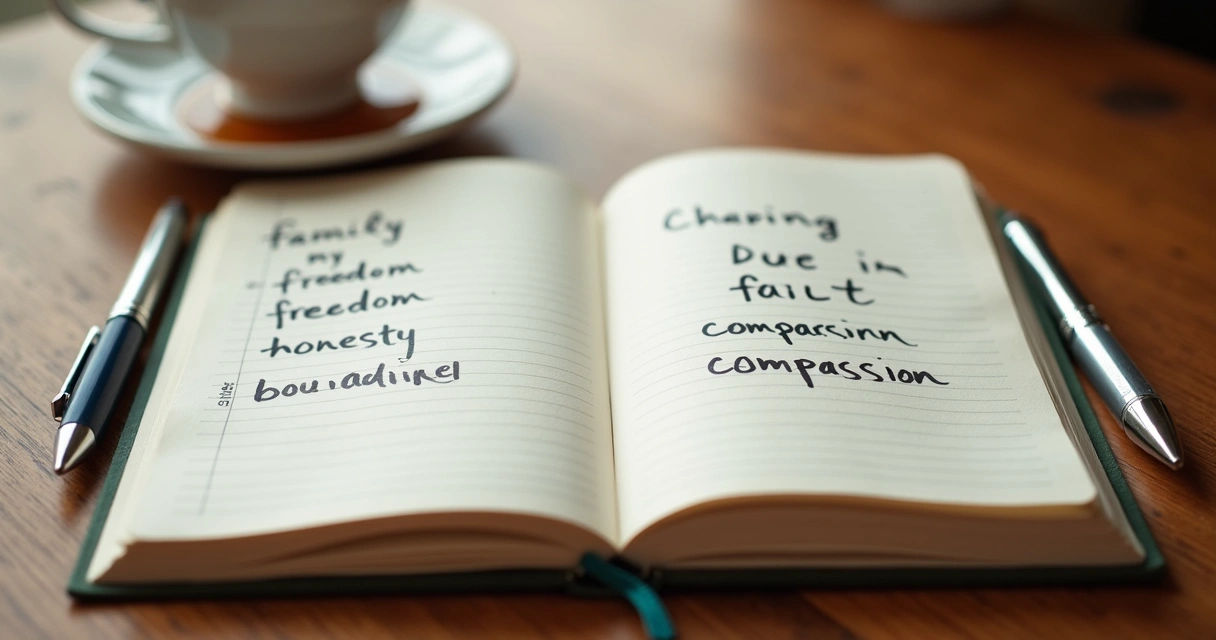
- Choose three values you want to live this month.
- Write one behavior for each value.
- Notice where old conditioning resists that behavior.
- Adjust without self-attack.
If we choose respect, for instance, the behavior might be speaking clearly when a boundary is crossed. If we choose responsibility, it might be telling the truth sooner instead of later. The point is to translate values into action.
We have seen that people gain more stability when they stop trying to keep every inherited value alive. No one can live in full loyalty to every voice from the past. Some values must be thanked and released.

Handling guilt and family tension
This part is often the hardest. Changing values can disturb family roles. If one person in a system stops pleasing, hiding, rescuing, or obeying, others may react. We may be called selfish, cold, disloyal, or confused. That does not always mean we are wrong. It may simply mean the old pattern is losing force.
Still, balance asks for care. We do not need contempt toward what shaped us. We can disagree without turning harsh. We can say, in effect, I see what this value gave us, and I also see where it limits my life now.
Respect and independence can coexist.
That sentence can change a lot. It softens false opposites. We do not have to choose between attachment and truth. We can mature our way into both, though not always without discomfort.
Conclusion
Balancing inherited and chosen values is part of becoming whole. It asks us to listen deeply, question bravely, and act with steadiness. Some values we will keep with gratitude. Others we will reshape. Others we will leave behind.
What matters is not whether a value is old or new. What matters is whether it helps us live with integrity, emotional honesty, and responsible freedom. In our view, that is where real alignment begins. Quietly. Clearly. One lived choice at a time.
Frequently asked questions
What are inherited and chosen values?
Inherited values are beliefs and standards we absorb from family, culture, religion, and early life. Chosen values are the principles we accept after reflection because they fit who we are and how we want to live.
How to balance inherited and chosen values?
We can balance them by identifying old beliefs, testing them against present reality, and keeping what supports truth, dignity, and healthy relationships. The aim is not total rejection of the past, but a conscious filter.
Why is it important to balance values?
Balance helps us avoid living by guilt, fear, or automatic loyalty. It supports clearer decisions, better boundaries, and a stronger sense of identity. It also reduces inner conflict between who we were taught to be and who we are becoming.
Can I change my inherited values?
Yes. We can question, reshape, or release inherited values over time. Some changes are gradual because values are tied to belonging and identity, but change is possible when we act with awareness and consistency.
What are practical ways to choose values?
Practical ways include journaling about repeated conflicts, naming the source of a belief, choosing three guiding values for a month, and linking each one to daily behavior. Honest self-observation helps chosen values become lived habits.